
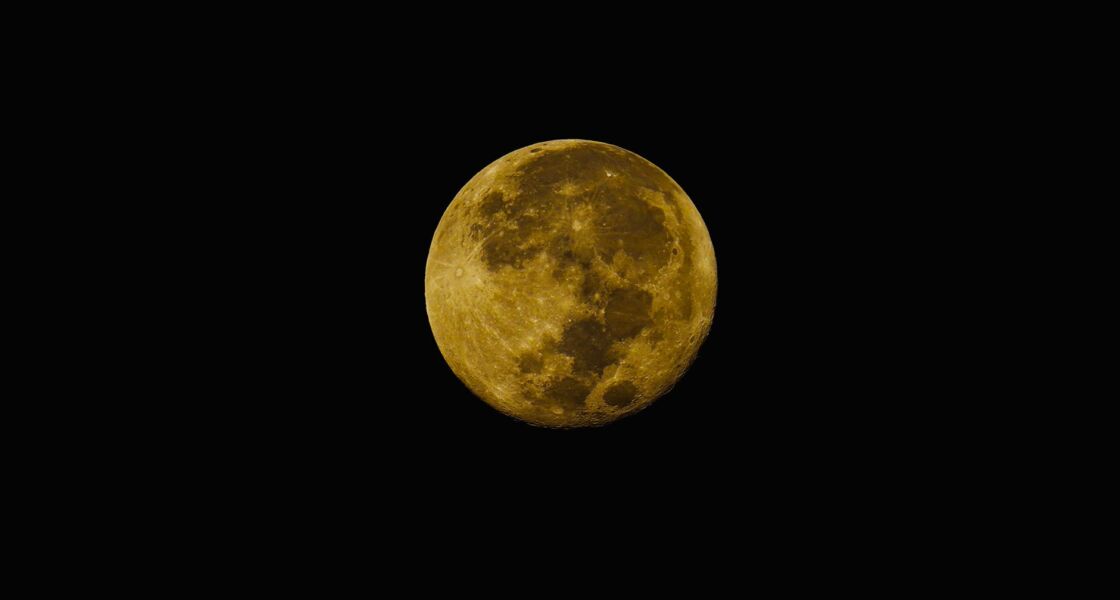
Earth has one moon. It is round, gray, and quiet. We love it, but let’s be honest: it keeps things simple.
The rest of the solar system did not get the memo. Out past Mars, moons do strange things. Some spray ice into space. Some have oceans hidden under their crust. One looks like the Death Star. Another is slowly falling toward its planet.
Here are 10 moons that make ours look downright ordinary, each one confirmed by NASA. We saved the weirdest for last.
1. Europa, the Ocean Under the Ice
From the outside, Europa looks like a cracked, frozen marble circling Jupiter. The surprise is underneath. NASA says a saltwater ocean lies beneath Europa’s icy shell, and it holds twice as much water as all of Earth’s oceans combined.
That buried sea is why NASA calls Europa one of the most promising places in the solar system to look for life beyond Earth. A spacecraft, Europa Clipper, is now on its way to study whether anything down there could survive.
2. Enceladus, the Moon With Geysers
Enceladus is a small, icy moon of Saturn, and it leaks. Giant jets of icy water and gas shoot out of cracks near its south pole. NASA measured the spray racing out at about 800 miles per hour.
Those jets come from a global ocean sloshing beneath the ice. Most of the spray falls back as snow, but some escapes into space and forms one of Saturn’s faint rings, called the E ring. A moon is quietly feeding a ring around its planet. All that fresh snow also makes Enceladus the whitest, most reflective body in the solar system.
3. Io, the Volcano World
If Enceladus is frozen, Io is on fire. This moon of Jupiter is the most volcanically active world in the whole solar system. NASA counts hundreds of volcanoes on its surface, some flinging fountains of lava dozens of miles high.
Why so angry? Io is caught in a gravitational tug-of-war. Jupiter pulls hard on one side while two neighboring moons tug from the other. All that stretching and squeezing heats Io’s insides until they boil over.
4. Titan, the Moon With Rain and Lakes
Titan is Saturn’s largest moon, and it is the only moon in the solar system known to have a thick, substantial atmosphere. Stand on its surface and you would see a hazy orange sky.
Stranger still, Titan is the only place besides Earth known to have liquid pooling on its surface. But its lakes, rivers and seas are not water. They are liquid methane and ethane, the same stuff that is a gas in your kitchen. It even has clouds and rain made of it. Titan is so intriguing that NASA is sending a flying robot called Dragonfly to explore it.
5. Triton, the Moon Going the Wrong Way
Almost every large moon orbits in the same direction its planet spins. Triton, the big moon of Neptune, does the opposite. NASA calls it the only large moon in the solar system that orbits backward, against its planet’s rotation.
That backward path is a clue. Scientists think Triton did not form around Neptune at all. It was probably a wanderer from the outer solar system, a Kuiper Belt object captured by Neptune’s gravity long ago. It even has geysers that spray icy material, making it one of the few moons that is still geologically active.
6. Ganymede, Bigger Than a Planet
Ganymede, a moon of Jupiter, is the largest moon in the solar system. It is so big that it beats the planet Mercury in size. A moon is larger than a planet.
It has another trick no other moon can match. NASA says Ganymede is the only moon known to have its own magnetic field, the kind of invisible shield usually found on planets like Earth. There is also strong evidence of a salty ocean hidden underground, possibly holding more water than all of Earth’s surface. NASA scientists even think Ganymede may have ice and water stacked in layers, like a club sandwich.
7. Mimas, the Death Star Moon
The first time many people see Saturn’s moon Mimas, they do a double take. One enormous crater sits on its face, and it makes the little moon look almost exactly like the Death Star from Star Wars.
The crater is named Herschel, and NASA measures it at 80 miles (130 kilometers) across, about a third of the width of the whole moon. Its walls rise about 3 miles high, with a mountain peak in the middle taller than most peaks on Earth.
8. Iapetus, the Two-Faced Moon
Another moon of Saturn, Iapetus, cannot decide what color to be. One side is bright, like fresh snow. The other is as dark as coal. NASA describes this split, with the dark half reflecting only a few percent of sunlight while the bright half bounces back more than half.
Iapetus has a second oddity. A ridge of mountains runs almost exactly around its equator, up to 6 miles (10 kilometers) tall. It gives the moon the look of a walnut, and scientists are still working out how a seam like that formed.
9. Miranda, the Patchwork Moon
Miranda is a small moon of Uranus that looks like it was built from spare parts. Its surface is a jumble of mismatched terrains, smashed together with sharp edges between them, as if someone glued the pieces on in a hurry.
It also has some of the tallest cliffs known. NASA says Miranda’s giant fault canyons run as much as 12 times deeper than the Grand Canyon. At about 300 miles (500 kilometers) across, Miranda is the smallest and innermost of the five moons known at Uranus before Voyager 2 flew past. One idea for its mismatched look is that the little moon was smashed apart in a colossal collision long ago, and the pieces then clumped back together in a hurry.
10. Phobos, the Moon That Is Falling
Mars has a tiny moon named Phobos, and it is in trouble. It circles Mars so fast that it laps the planet three times every single day, racing around quicker than Mars itself turns.
It is also creeping closer. NASA says Phobos is nearing Mars by about six feet every hundred years. At that rate the moon will, in roughly 50 million years, either crash into the planet or be torn apart into a ring around it. Mars may one day have rings of its own.
Ten moons, and not one of them is boring. Next clear night, look up at our plain gray Moon and remember: it has some very strange cousins.