
Picture a gray bird nearly as tall as you are, standing in a swamp without moving a muscle. It stares at the water. Minutes pass. More minutes. Then it folds forward in a sudden crash and comes up with a lungfish. This is the shoebill, and its best trick is doing almost nothing at all.
A Bird Built Like a Statue
The shoebill stands up to five feet tall, only inches shorter than an average person. Its wings stretch almost eight feet from tip to tip. For all that size, it is surprisingly light, weighing up to about 16 pounds.
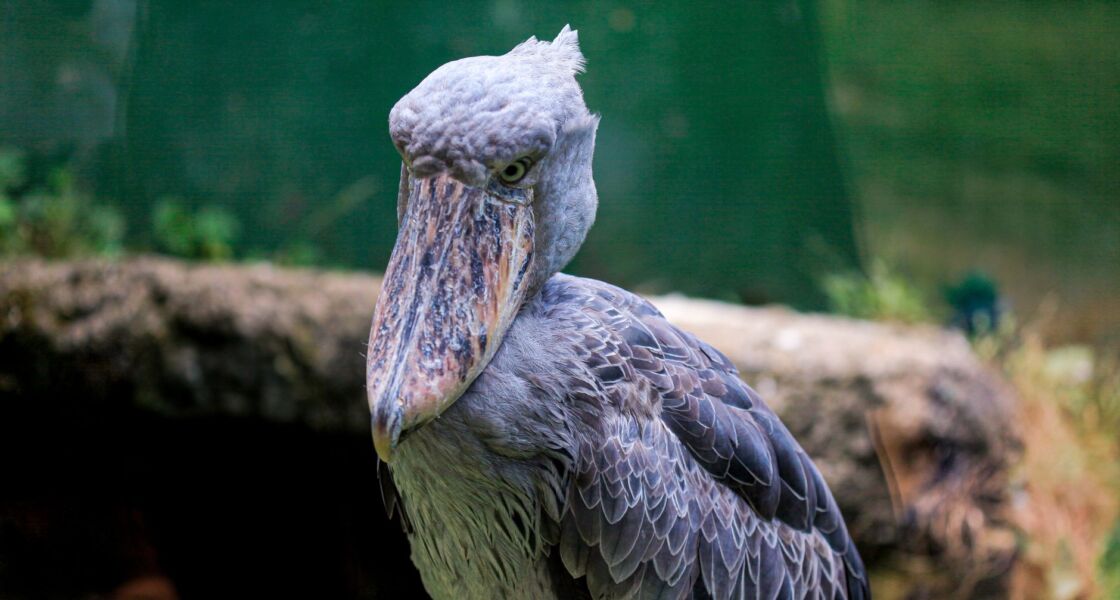
It is slate gray from head to toe, with pale eyes set in a big, flat-topped head. The whole bird has a look that people often call prehistoric, like something that wandered in from an older version of the world.
Scientists call it Balaeniceps rex, which means roughly “whale-head king.” Its closest living relatives are the pelicans, not the storks it is often grouped with by nickname.
The Shoe That Catches Fish
The shoebill is named for the one feature you cannot miss: its enormous bill, shaped like a wooden clog or a Dutch shoe. It runs about nine inches long and four inches wide, with sharp edges and a hooked tip.
That bill is not just for show. It is built to grab and hold slippery, thrashing prey. The shoebill’s favorite meal is the lungfish, a long marsh dweller that can reach six feet and weigh close to eight pounds. A fish that big and slick needs a serious set of jaws.
The Long, Patient Wait
Most hunters chase. The shoebill waits. It takes up a spot at the edge of the water and simply stops, holding so still that it seems carved from stone. Its eyes stay locked on the surface, watching for the smallest ripple.
When a fish finally rises to gulp air, the shoebill moves. It lunges forward, spreads its wings, and plunges down bill-first into the water, throwing its whole body weight behind the strike. Zookeepers call this move a “collapse.” It takes only seconds, and it is done with startling power and aim.
Then the bird sorts out its catch. It swings that big head back and forth, tipping water, weeds and anything it does not want out of the bill, until just the meal is left.
Lungfish, Snakes and Baby Crocodiles
Lungfish may be the favorite, but the shoebill is not picky. It also takes catfish, tilapia, eels and water snakes. When the chance comes, it will grab Nile monitor lizards, young turtles, and even baby crocodiles.
So the swamp’s patient statue is also one of its quiet dangers. A bird that can swallow a small crocodile is not one the local wildlife takes lightly.
A Sound Like a Machine Gun
For such a large, dramatic animal, the shoebill is mostly silent. It does not sing or call the way many birds do. But it does have one strange sound, and it does not use its voice to make it.
Instead, the shoebill claps the two halves of its huge bill together, fast and hard. The result is a loud, rattling burst that people compare to a machine gun or a round of applause. Shoebills clatter like this to greet a mate at the nest or to say, in bird terms, that this patch of swamp is spoken for.
Home in the African Swamps
Shoebills live in the vast freshwater wetlands of eastern Africa, especially the marshes and swamps of the Nile watershed. Their range stretches from South Sudan and Ethiopia south toward Zambia.
These are not easy places to reach, which is part of why the shoebill stayed so mysterious for so long. The bird needs wide, undisturbed swamps full of lungfish to make a living, and it tends to keep to itself, hunting alone across its quiet corner of the marsh.
Conservation groups keep a close eye on it. The International Union for Conservation of Nature lists the shoebill as Vulnerable, with a population thought to number only a few thousand adults and slowly going down, mostly as its wetlands are drained, burned or disturbed.
A Face You Don’t Forget
People who meet a shoebill often describe the same thing: the stare. The bird fixes those pale eyes on you and holds them there, steady and unblinking, as if it is deciding something.
It is not really sizing you up, of course. That patient, locked-in gaze is the same one it aims at the water all day, the stillness that lets a five-foot bird vanish into a swamp and wait for a lungfish to make the first move. Blink first, and you lose.