
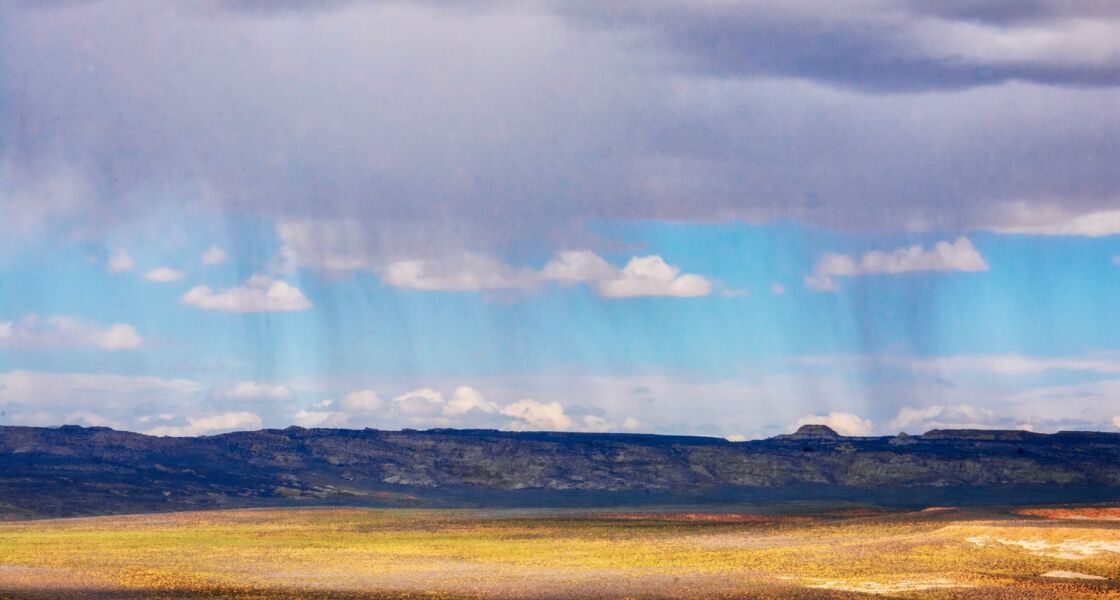
For most of the year, parts of the American Southwest are dry, hot and quiet. Then, in early summer, the sky starts to change. Towering clouds pile up over the mountains. By afternoon, a downpour can drench a canyon that was dusty that morning.
That is the North American monsoon. And it is one example of a pattern that happens in many places around the world.
So what is a monsoon?
NASA describes a monsoon as a seasonal rain and wind pattern. Seasonal is the key word. A monsoon is not one storm. It is a whole stretch of the year when the winds shift and the weather changes with them.
NASA also notes that monsoons occur all over the world. One NASA page names South Asia as a place where this pattern happens, and says satellites now let scientists watch monsoon rains develop like never before. But monsoons are not limited to one corner of the map. The American Southwest has one too.
The rain matters a great deal. NASA says monsoon rains provide important reservoirs of water, sustain farming, and refill underground water supplies called aquifers. In South Asia, NASA adds, too much rain routinely causes disasters, including river floods and landslides on steep land.
The monsoon of the American Southwest
The National Park Service describes the North American monsoon as a seasonal shift that affects the southwestern United States and northern Mexico. At the Gila Cliff Dwellings, it runs from late June through September. Saguaro National Park in Arizona officially counts monsoon season from June 15 through September 30.
The dates are a little loose, though. At Saguaro, the first storm often does not show up until early July. Once the season gets going, the clouds tend to build in the afternoon, so the strongest storms tend to arrive in the afternoons and evenings.
What sets it off
It starts with the Sun. In late spring and early summer, the land of the interior Southwest heats up. The park service explains that this strong heating creates an area of low pressure over the region.
At the same time, a zone of high pressure grows over northern Mexico and the southeastern United States. Together, these shifts change the wind patterns and pull moist air in from the Gulf of California and other warm waters to the south.
Then the mountains do their part. As the moist air travels over a range, it is forced upward. It cools, the water vapor turns into tiny droplets, and the droplets build into tall thunderclouds called cumulonimbus clouds. Those clouds release the storms that define the season.
Dry storms and a different kind of danger
Early in the season, in late June and early July, storms can form before the full flow of moisture has arrived. These dry thunderstorms bring lightning and strong winds, but little or no rain reaches the ground. The rain evaporates on the way down through dry air. Rain that never reaches the ground has a name: virga.
That matters because lightning can start fires. The park service says dry lightning is one of the leading causes of wildfires in the Gila National Forest.
Lightning also likes tall things. At Saguaro National Park, the park service notes that lightning often strikes trees and saguaro cacti, which is why the park service says to stay away from them and to find shelter if you are caught outside in a storm.
The desert wakes up
Here is the happy part. After months of heat and dryness, the first sustained rains start a kind of reset. Dry creek beds begin to flow. Springs refill. In the Gila, the river swells with runoff, and cottonwood, willow and sycamore trees along the banks get a long drink.
The green comes fast. Within a few weeks, the park service says, rocky and dry ground can turn into a flush of green growth. In wet summers the change is big. In lean years it is smaller, and the patches of green stand out against the stony hills.
Animals respond too. The park service says mule deer, black bears, gray foxes and bobcats become easier to spot as they move across the wet landscape in search of food and water.
The toads that wait all year
The best show may be underground. At Saguaro National Park, the park service says torrents of summer monsoon rain summon toads from their burrows, where they spend most of the year. On July nights, hundreds can be found breeding in temporary pools.
Take Couch’s spadefoot. It spends most of the year several feet underground in a dormant state, safe from heat and dryness. The sound of thunder and rain prompts it to come up. It starts eating right away, often choosing termites that also emerge in the summer rains. The park service notes this might be its only chance to eat until the next summer.
Then it has to hurry, because puddles do not last. Spadefoot eggs hatch in about 15 hours, and tadpoles can become toadlets in as few as 9 days. Males call with a sound the park service describes as sheep-like.
No two summers are alike
A monsoon is a season, not a promise. The park service says some summers bring regular, soaking storms. Others bring only scattered showers with long dry gaps. At Saguaro, some years may see rain nearly every afternoon, while others bring only a handful of showers.
Part of the reason is El Niño and La Niña, natural ocean and weather patterns that can tip a summer toward drier or wetter. Visitors who return year after year to the Gila notice it: sometimes the creeks gush, and sometimes they are little more than dusty channels.
Flash floods come fast, and the park service calls them dangerous. But at Saguaro, a flood often fades about as quickly as it arrived. Rangers there say not to cross a flooded wash, a dry stream channel, and to sit back and enjoy the show until it is safe.
The desert spends most of the year waiting, and the toads, it turns out, are very good at it.