
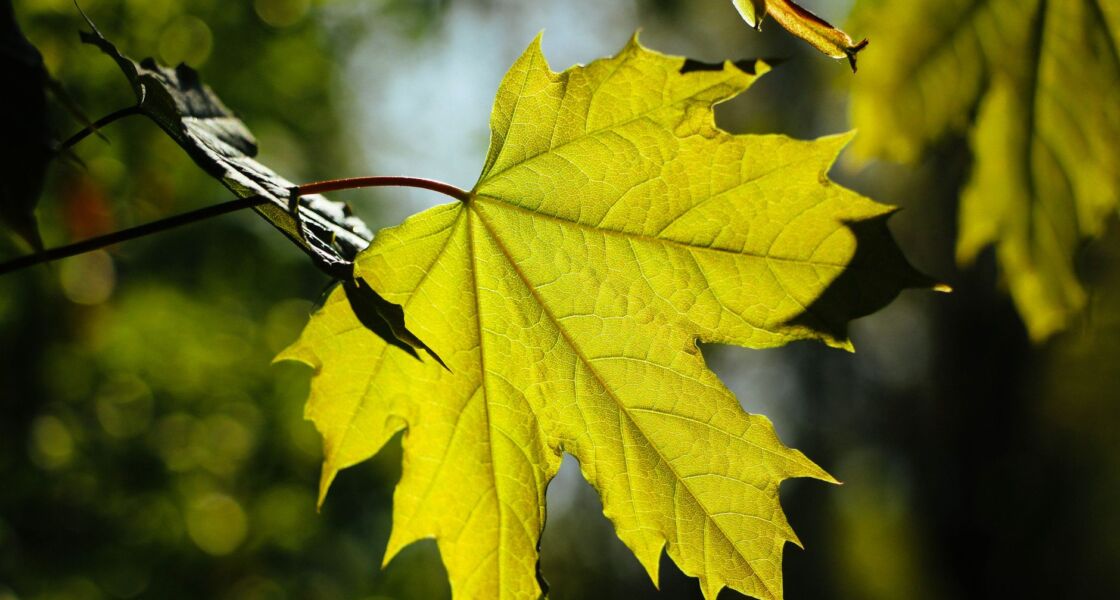
A tree never eats lunch. It has no mouth, no kitchen and no grocery store. Yet it keeps growing, year after year, and all it ever seems to do is stand in the sun.
So where does the food come from? The answer is one of the quietest wonders on Earth. Plants make their own food out of light and air. The process is called photosynthesis.
A kitchen inside every leaf
Here is the short version. During photosynthesis, plants take in carbon dioxide, a gas in the air, along with sunlight. They use them to make glucose and other sugars. NASA describes these sugars as the fuel plants use for building plant structures.
Think about that for a moment. The wood in a tree trunk, the stem of a sunflower and the blades of grass in a yard are built, in large part, from carbon that was once floating in the air.
Then the plant puts the sugar to work. NASA notes that plants break down their sugar to get the energy they need to grow. It is the same basic job your own body does with food, only the plant makes its own fuel first.
The secret ingredient is a pigment
To catch sunlight, a plant needs a tool. That tool is chlorophyll, the pigment in plant leaves. A pigment is a substance that gives something its color, and it also soaks up light.
NASA scientists explain that chlorophyll strongly absorbs visible light, the kind our eyes can see, for use in photosynthesis. The more visible sunlight a plant absorbs during the growing season, the more it is photosynthesizing and the more productive it is.
Leaves have another trick. Their cell structure strongly reflects near-infrared light, a kind of light our eyes cannot see. So a leaf soaks up visible light and bounces near-infrared light back out.
What else does a plant need?
Light and air are not the whole recipe. NASA says phytoplankton growth depends on carbon dioxide, sunlight and nutrients, such as nitrate and phosphate. Land plants need those nutrients too, in amounts that depend on the species.
Even a pinch of the right ingredient can matter. NASA notes that phytoplankton need trace amounts of iron, and that iron is so scarce in large areas of the ocean that it limits their growth there.
Water, wind, temperature and hungry grazers all play a part as well. A plant’s day is busier than it looks.
Who eats the sugar?
The sugar a plant makes does not stay put. NASA points out that animals, including people, eat plants or plankton and break down the plant sugar to get energy.
That means almost every meal on land traces back to a leaf somewhere. A deer nibbling a twig, a caterpillar chewing a maple leaf and a hiker eating a sandwich are all running on sunlight that a plant caught first. The sunlight just took a few steps on the way.
Plants are also big storage tanks. NASA says forests hold carbon in their wood, stems and leaves. When a forest is cleared, that stored carbon no longer builds more plant matter.
The biggest photosynthesizers you can’t see
Here is the twist. Some of the most important photosynthesizers on Earth are not trees at all. They are phytoplankton, tiny drifting organisms that live in oceans, lakes and rivers.
NASA says most phytoplankton are single-celled plants. Others are bacteria or protists. Like land plants, they have chlorophyll to capture sunlight, and they use photosynthesis to turn it into chemical energy. They take in carbon dioxide and release oxygen.
Not every phytoplankton plays strictly by the plant rules. NASA says all of them photosynthesize, but some get extra energy by consuming other organisms.
Their numbers can explode. When conditions are right, phytoplankton form a bloom, and NASA notes that ocean blooms may cover hundreds of square kilometers and show up clearly in satellite images. Yet any single phytoplankton rarely lives more than a few days.
These tiny plants are the base of many ocean food webs. NASA says they feed everything from microscopic animal-like zooplankton to multi-ton whales.
Photosynthesis from space
Photosynthesis is so big that satellites can watch it happen. NASA says scientists measure visible and near-infrared light bouncing off the land to map where green plants are thriving and where they are under stress, for example from a lack of water.
The maps tell real stories. In August 1993, heavy rain in the Northern Great Plains led to flooding along the Missouri River, and the very lush plant growth showed up in the satellite data. At the same time, rainfall was very low in the Eastern US, and that region showed up as strongly below normal.
The ocean has its own show. NASA shared a pair of satellite images of a bloom that formed east of New Zealand between October 11 and October 25, 2009. In about two weeks, the bloom grew large enough to see from orbit.
Where does the oxygen come from?
You might have heard that rainforests are the lungs of the planet. The ocean has a strong claim too. NOAA says scientists estimate that roughly half of the oxygen produced on Earth comes from the ocean, mostly from drifting plants, algae and some bacteria that photosynthesize.
One tiny bacterium stands out. NOAA says Prochlorococcus is the smallest photosynthetic organism on Earth, and it produces up to 20 percent of the oxygen in our entire biosphere. That is a higher share than all the tropical rainforests on land combined.
There is a catch that keeps the story fair. NOAA adds that the ocean consumes roughly the same amount of oxygen that it makes, because marine life breathes it too. And the oxygen people breathe mostly comes from the atmosphere, where it has built up over hundreds of millions of years.
A wonder worth a second look
Next time you walk past a leaf, give it a quick nod. Inside it, pigment is catching light, air is being turned into sugar, and a whole food chain is getting its start.
The ocean does the same job on an even bigger scale. NASA says phytoplankton consume carbon dioxide at a scale equivalent to forests and other land plants. And NASA estimates that this “biological carbon pump” moves about 10 gigatonnes of carbon from the atmosphere to the deep ocean each year.
The biggest kitchen on Earth, it turns out, is mostly too small to see.