
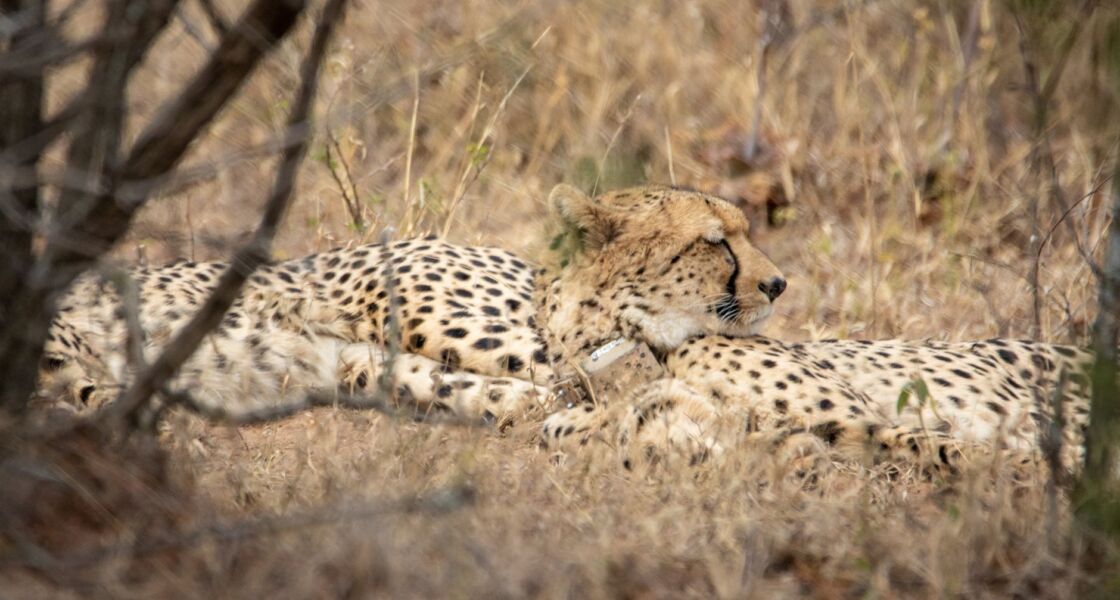
A cheetah can go from a standstill to highway speed before you finish reading this sentence. It is the fastest land animal on Earth, and almost every part of its body is built for one thing: the sprint.
Just how fast is a cheetah?
In a full chase, a cheetah’s top speed averages between 60 and 70 miles per hour, according to the Smithsonian’s National Zoo. That is faster than cars are allowed to go on most American highways.
The launch is the part that really stuns. The San Diego Zoo describes a cheetah reaching freeway speeds in just a few strides. The National Zoo puts numbers on it: zero to 45 miles per hour in about 2.5 seconds. National Geographic clocks the full acceleration at zero to 60 miles per hour in only about three seconds. Few sports cars can match that off the line.
But a cheetah cannot hold that pace. National Geographic notes it can only keep near-top speed for about 30 seconds. The National Zoo describes a sprint of roughly 300 yards, lasting around 20 seconds. After that, the cat is out of breath and has to stop. A chase is a short, all-or-nothing gamble.
A body built for the sprint
Speed this extreme takes special equipment. A cheetah’s spine is unusually flexible, almost springy. The San Diego Zoo explains that this bending spine lets the front legs stretch far forward with every bound, stretching out each stride. The National Zoo says a running cheetah can cover 23 feet in a single stride and take four strides every second.
The feet help too. Most cats pull their claws all the way in, but a cheetah’s claws are only semi-retractable, so they stay partly out. National Geographic compares them to the spikes on a sprinter’s shoe, digging into the dirt for grip. Hard paw pads add extra traction on the turns.
Then there is the tail. That long, heavy tail works like a rudder on a boat, swinging to help the cat steer and stay balanced when it swerves at full speed after dodging prey.
The whole package stays light on purpose. A cheetah’s body runs about 44 to 56 inches long, per the National Zoo, and it weighs roughly 75 to 140 pounds. That is slim and leggy next to a lion. There is no bulk to slow it down, just a lean sprinter’s build wrapped around that oversized engine.
The engine inside
Running that hard burns through oxygen at an astonishing rate, so a cheetah’s insides are supersized to keep up. The San Diego Zoo notes that its nostrils, lungs, and heart are all enlarged. National Geographic adds that large nasal cavities let the cat gulp in huge amounts of air.
The National Zoo points to the large liver, heart, and adrenal gland, which help the body switch into top gear in an instant. Together these parts flood the muscles with oxygen and fuel for that frantic 20-second dash. It is a lot of hardware packed into a lean, lightweight frame.
Where cheetahs live, and how they are doing
Most cheetahs live in the open grasslands and savannas of eastern and southern Africa, where there is room to run. National Geographic notes that one group, the Asiatic cheetah, survives only in Iran, far from the rest. A century ago cheetahs roamed across much of Africa and Asia; today their range is a fraction of that.
They hunt by sight during the day, chasing antelope such as gazelles, along with hares, ground birds, and other small game. Speed is their whole strategy. They are not strong enough to wrestle big prey or to fight off lions and hyenas, which often steal a cheetah’s hard-won meal.
Life in the wild is short. The National Zoo puts it at about 8 to 10 years, though cheetahs in human care can reach 12 to 15. Cubs have an especially hard time, since the same lions and hyenas that steal meals also threaten the young. A cheetah’s speed is a brilliant tool for catching dinner, but it does little to keep the cat itself safe.
Cheetahs are not as common as they once were. National Geographic reports fewer than 7,000 adults left in the wild and lists the species as Vulnerable on the IUCN Red List, with a population that is still shrinking. For an animal that can outrun almost anything, its biggest troubles are the ones it cannot sprint away from: lost habitat and shrinking space to roam.
Still, on a wide-open plain, nothing on four legs can catch a cheetah at full tilt. For 20 glorious seconds, it is the fastest thing alive.