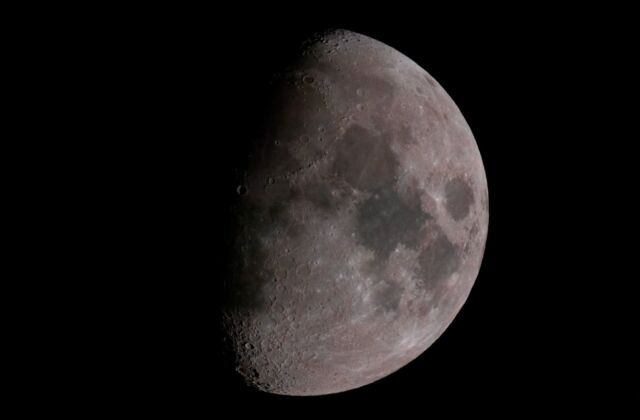

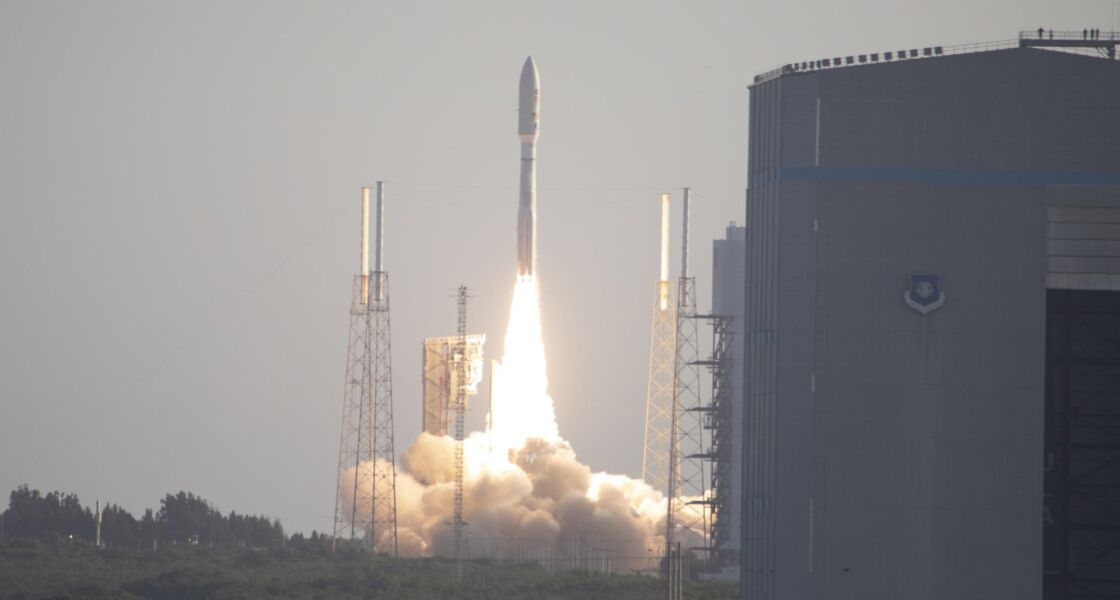
The Apollo astronauts reached the Moon in a few days. Apollo 8, the fastest trip, took just under three days to go from Earth orbit to orbit around the Moon.
Mars is a different kind of trip. Reaching it generally takes somewhere between seven and ten months, flying a relatively direct route. That is a long time to ride in a spacecraft, and the length of the trip is only half the puzzle. The other half is picking the right day to leave.
Seven months to ten months
NASA gives real examples. The Mars Reconnaissance Orbiter took about seven and a half months to reach Mars. A mission called MAVEN took about ten months.
The rover Perseverance blasted off on July 30, 2020, and landed in Jezero Crater on February 18, 2021. Count the days and you get 203, just under seven months. NASA says the cruise phase of a typical Mars mission, the stretch of travel from Earth to Mars, lasts about 200 days.
Older missions took the long way, too. Mariner 4, the first successful mission to Mars, launched on November 28, 1964, and flew past the planet on July 14, 1965. That is about seven and a half months. In 1975, Viking 1 began a 304-day cruise, and Viking 2 followed with a 320-day voyage. That is roughly ten months and a bit more.
Nothing about those trips was slow on purpose. The distance is simply huge, and it is never the same two days in a row.
Mars is never a fixed distance away
Earth and Mars both circle the Sun, but they move at different speeds and sit at different distances. Mars is about 50 percent farther from the Sun than Earth is. And a year on Mars lasts 687 Earth days, almost twice as long as ours.
On average, Mars is 142 million miles from the Sun. Sunlight takes about 13 minutes to make that trip, which is a good reminder of how much room there is out there.
So the gap between the two planets keeps changing. NASA says the minimum distance from Earth to Mars is about 33.9 million miles, and that this does not happen very often. In 2003, Mars came within 34.6 million miles of Earth, the closest it had been in nearly 60,000 years. In October 2020, the distance was about 38.6 million miles.
Those are the close passes. Most of the time, Mars is a lot farther than that.
Why you can only leave at certain times
You might picture a spacecraft flying straight at Mars, like a ball thrown at a target. But the target is moving, and so is the thrower.
NASA explains that because Earth and Mars orbit the Sun at different speeds and distances, about once every 26 months they are lined up in a way that allows the most energy-efficient trip to Mars. Energy-efficient matters because a rocket can only carry so much fuel. Leaving at a good time means the spacecraft can take a path that uses less of it.
That repeating stretch of good departure dates is called a launch window. Earth and Mars also reach their closest lineup, called opposition, about every two years. A NASA writer pointed out that this is why most NASA missions to the Red Planet are at least two years apart.
When the planets are not lined up, a spacecraft can wait. ESCAPADE did exactly that. Its twin spacecraft launched into that looping waiting orbit, and NASA’s plan was to use Earth’s gravity to slingshot them toward Mars in the fall of 2026, once the planets were back in the right positions.
How a Mars trip works from start to finish
Every Mars mission follows a similar set of stages. First comes liftoff. Soon after, the spacecraft separates from its rocket and starts the long cruise. During the cruise, engineers on Earth keep close watch.
About two months before arrival, the approach phase begins. Then comes the tricky part. A spacecraft that wants to orbit Mars must fire its rockets to slow down, so Mars can capture it. A spacecraft that wants to land has to get through entry, descent and landing, which NASA calls the shortest and most intense phase of a rover mission.
Even the arrival takes planning. ESCAPADE’s two spacecraft were set to reach Mars a few days apart. Each would fire its engines for about 11 minutes to slow down, then settle into a big looping “capture” orbit lasting about 60 hours before moving to smaller orbits for science.
Seven months of travel, and the most intense part is also the shortest.
What about places farther away?
Mars may feel far, but it is the neighborhood next door. NASA says Jupiter is about five times farther from the Sun than Earth is. To make a trip there practical, spacecraft use flybys of Earth or Venus to change speed without burning fuel. Even so, it takes about five to six years.
NASA’s Galileo mission, the first to visit Jupiter, took just over six years. The second, Juno, took just under five.
So the scale runs like this: a few days to the Moon, seven to ten months to Mars, and five to six years to Jupiter.
A planet full of robots
Every one of the trips above was made by a spacecraft with no people on board. NASA describes Mars as the only planet we know of inhabited entirely by robots, which means plenty of them have already made the long trip and stayed.
Some stayed a very long time. Viking 1 entered orbit around Mars on June 19, 1976, and its lander touched down on July 20. That lander kept working for 2,307 Earth days, more than six years, and held the record for the longest-operating spacecraft on the surface of Mars until May 19, 2010, when the rover Opportunity passed it.
Think about that for a moment. It spent about ten months getting there, and then it worked for six years.
The next time you see an orange-red dot in the night sky, remember: that is a place that takes about 200 days to reach, and you have to leave at exactly the right time.