
Meteor, meteoroid, meteorite. Three words, one letter apart, and almost everyone mixes them up. Are they the same thing with different names? That is the common mix-up, and the answer is no.
They are three names for the same space rock at three different moments in its trip. Once you see the pattern, you will not forget it.
Where the mix-up comes from
The words look almost the same, and in everyday talk people use them loosely. A bright streak in the sky gets called a “meteorite.” A rock in a museum gets called a “meteor.” Nobody is being silly. The words really are close, and Royal Museums Greenwich even made a video to help, because the names are so easy to tangle.
Part of the trouble is that the object changes names without changing at all. The rock is the same rock. Only where it is, and what it is doing, has changed.
The verdict: Myth
Myth. A meteor and a meteorite are not the same thing. A meteoroid is the rock in space, a meteor is the streak of light it makes, and a meteorite is the piece that lands on the ground.
NASA lays it out in three short steps. Here they are in the order a space rock would meet them.
Step one: the meteoroid
A meteoroid is a rock that is still out in space. It can be as small as a grain of dust or as big as a small asteroid. NASA says the word only applies while the rock is still up there.
Most meteoroids are pieces broken off something larger. Some come from comets and some from asteroids. A few even come from the Moon and other planets.
Step two: the meteor
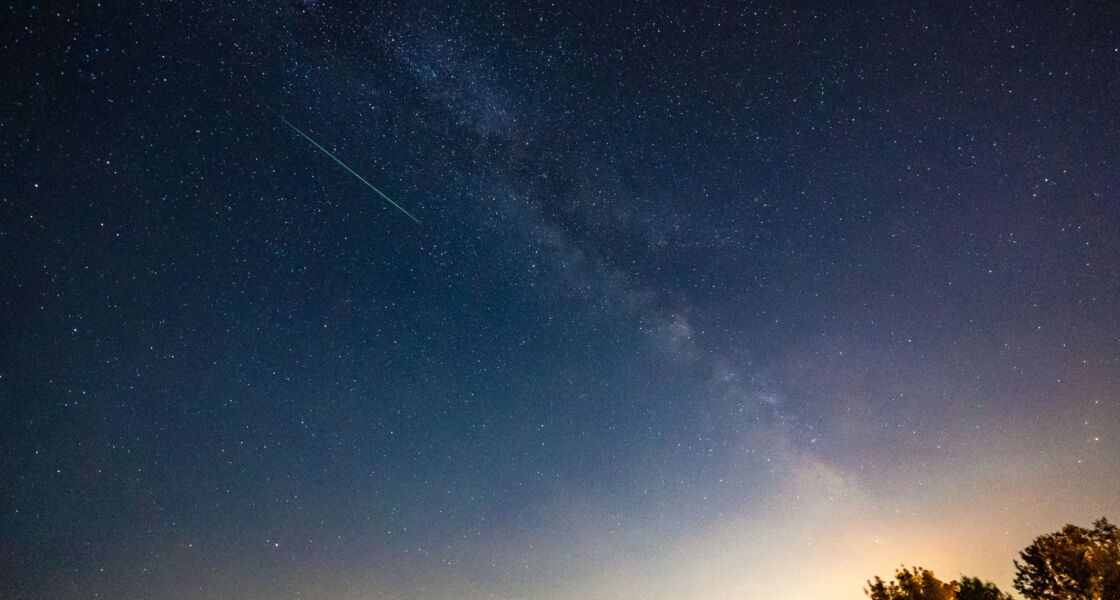
Now the meteoroid drops into Earth’s atmosphere at high speed and burns up. That flash is a meteor. It is also what we call a “shooting star,” though it has nothing to do with stars.
Here is the twist. NASA’s Space Place explains that the bright streak is not really the rock. It is the glowing hot air around it. As the rock rushes through the atmosphere, the air pushes back, and the rock gets extremely hot.
Meteors are common. NASA says several can usually be seen per hour on any clear night. Royal Museums Greenwich puts the usual rate of the random ones at about one every ten minutes. A very bright meteor, one that outshines the planet Venus, gets its own name: a fireball.
Step three: the meteorite
Sometimes a meteoroid survives the fiery trip and reaches the ground. Then, and only then, it is a meteorite.
That is rare. NASA says most space rocks smaller than a football field break apart in the atmosphere. Less than 5 percent of the original object usually makes it down. Meteorites typically range from the size of a pebble to the size of a fist.
So if you see a shooting star, you have almost certainly seen a meteor. You have almost certainly not seen a meteorite fall.
What a meteorite looks like
A meteorite can look a lot like an ordinary Earth rock. But NASA says it usually has a burned outer layer that can look shiny. This “fusion crust” forms when the outside of the rock melts on the way down.
There are three main kinds: the irons, the stonys and the stony-irons. Most meteorites that fall to Earth are stony. But most of the ones found long after they land are irons. Iron ones are heavier and easier to tell apart from Earth rocks.
That is why deserts are great hunting grounds. On big, open stretches of sand with few rocks, a dark meteorite stands out. The same goes for the frozen plains of Antarctica.
Do meteor showers drop meteorites?
Almost never. Most meteor showers come from comets, and comet material is fragile. NASA says small comet fragments generally will not survive the trip through the atmosphere. So do not go looking for meteorites in the yard after a shower.
Most of that comet debris is between the size of a grain of sand and a pea. It burns up long before it gets near the ground.
Where meteorites come from
More than 50,000 meteorites have been found on Earth, NASA says. About 99.8 percent of them come from asteroids. The rest are split roughly evenly between the Moon and Mars. That means you can hold a piece of another world in your hand.
Scientists care because meteorites are some of the original building materials of the solar system. Some are up to 4.6 billion years old. Studying them helps us learn how planets formed.
A quick way to remember
Think of one rock’s whole journey. In space, it is a meteoroid. Burning up in the sky, it is a meteor. Landed on the ground, it is a meteorite.
One handy clue: meteorite ends in “ite,” the way many rocks do. It is the one you can pick up.