
A male humpback whale can sing the same song for more than 24 hours. And the other males nearby are singing the very same tune.
A Whale as Long as a Bowling Lane
Humpback whales are big. An adult can reach up to about 60 feet long, which is about the length of a bowling lane. It can weigh up to about 40 tons, according to NOAA Fisheries.
The name comes from a hump on the whale’s back. The scientific name, Megaptera novaeangliae, means “big-winged of New England.” The “big wings” are the whale’s pectoral fins, or flippers. National Geographic says they can grow up to 16 feet long.
Humpbacks are baleen whales. They have no teeth. Instead, rows of stiff plates hang from the upper jaw and work like a sieve. A humpback gulps a huge mouthful of ocean, pushes the water out, and swallows what stays behind: krill and small fish.
The National Park Service says a humpback eats about a ton of food a day, and its mouth can hold around 500 gallons of seawater and prey at once.
Songs Sung by the Males
Humpback whales are famous for their songs: long, rising and falling sequences of moans, howls and cries. National Geographic says the songs can go on for hours at a time.
The songs have a clear structure. NOAA scientists describe them like a poem. Short repeating sounds are the “phrases,” like lines. Several phrases together make a “theme,” like a stanza. Put the themes in order and you have a song.
Scientists believe only males sing, and the songs are most often heard on the winter breeding grounds. A singing session can last from five minutes to more than 24 hours. Within one area, the males all sing the same current version of the song. Sometimes they sing together in “choruses.”
Why do they sing? Scientists agree the songs likely play a role in mating, but the exact job of the song is not well understood. Recordings from the last 50 years show that males also sing on their summer feeding grounds and during migration. Nobody is sure why.
Fishing With a Net Made of Bubbles
On the feeding grounds, some humpbacks hunt with a trick that sounds invented. They blow bubbles on purpose.
NOAA Fisheries calls it “group coordinated bubble net feeding.” The whales make curtains of air bubbles that gather their prey into a tighter group. Once the fish are corralled, the whales push them toward the surface. Then they lunge upward through the circle of bubbles with their mouths open.
Humpbacks have other ways to herd a meal, too. NOAA says they can use sounds, the seafloor and even their pectoral fins. There also seems to be some regional specialization, which means whales in different places have favorite bubble tricks of their own.
One of the Longest Trips Any Mammal Makes
Humpbacks live in all the world’s oceans, and many of them travel. In warmer months they feed in cold, food-rich water. They build up a layer of fat called blubber, which gets them through the winter. Then they head for warm water to mate and have calves.
NOAA Fisheries says humpbacks have one of the longest migrations of any mammal. Some swim 5,000 miles between their feeding grounds and their winter breeding waters.
In the North Pacific, some whales swim from Alaska to Hawaii. That trip is about 3,000 miles, and NOAA says they can finish it in as few as 28 days.
Why Do Humpbacks Jump?
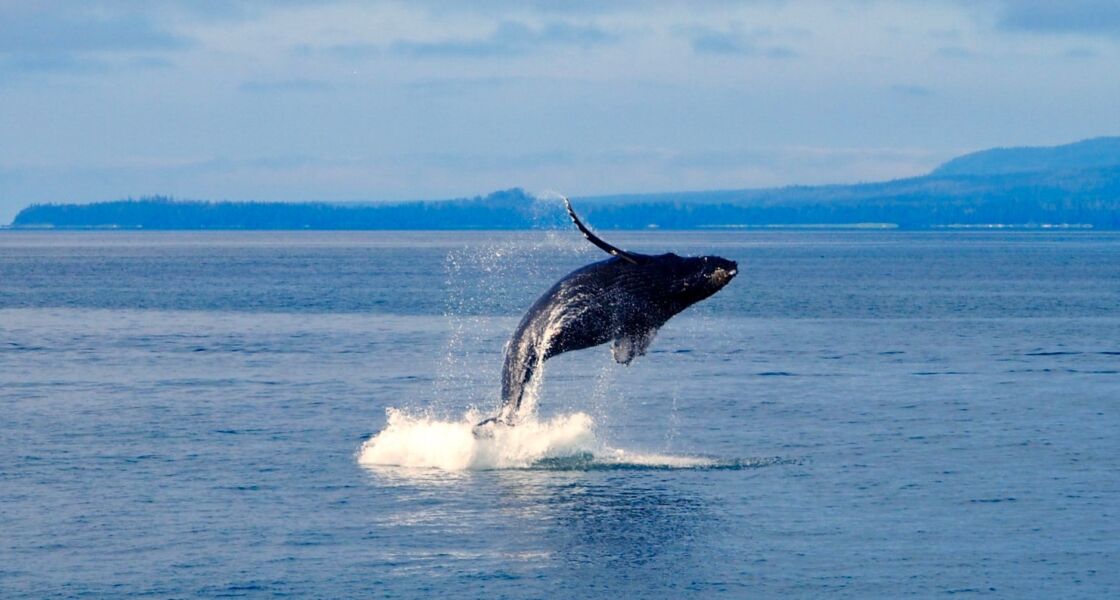
Humpbacks are a favorite of whale watchers because they are so active. They breach, which means they leap out of the water and land with a huge splash. They slap the surface with their fins and tails. They poke their heads straight up to look around, a move called spyhopping.
National Geographic also describes a move that belongs only to this species: the peduncle throw. The whale lifts its rear body and tail out of the water, twists, and slams down sideways.
So why do it? Scientists are not sure. National Geographic says breaching might help clean pests off the skin, or the whales may simply do it for fun.
Fingerprints on the Tail
Every humpback has its own tail. The underside of the tail, called the fluke, has a pattern of black and white that is different on each whale. Flukes can be up to 18 feet wide.
NOAA says the patterns are distinctive enough to work like fingerprints. Scientists photograph a whale’s fluke as it dives, then use the picture to recognize that same whale again years later.
Young whales start small. A calf is about 13 to 16 feet long at birth after an 11-month wait. It stays close to its mother for up to a year. National Geographic says a humpback keeps growing until about age 10.
Humpbacks can live about 80 to 90 years, so a whale photographed today could be recognized for a very long time.