
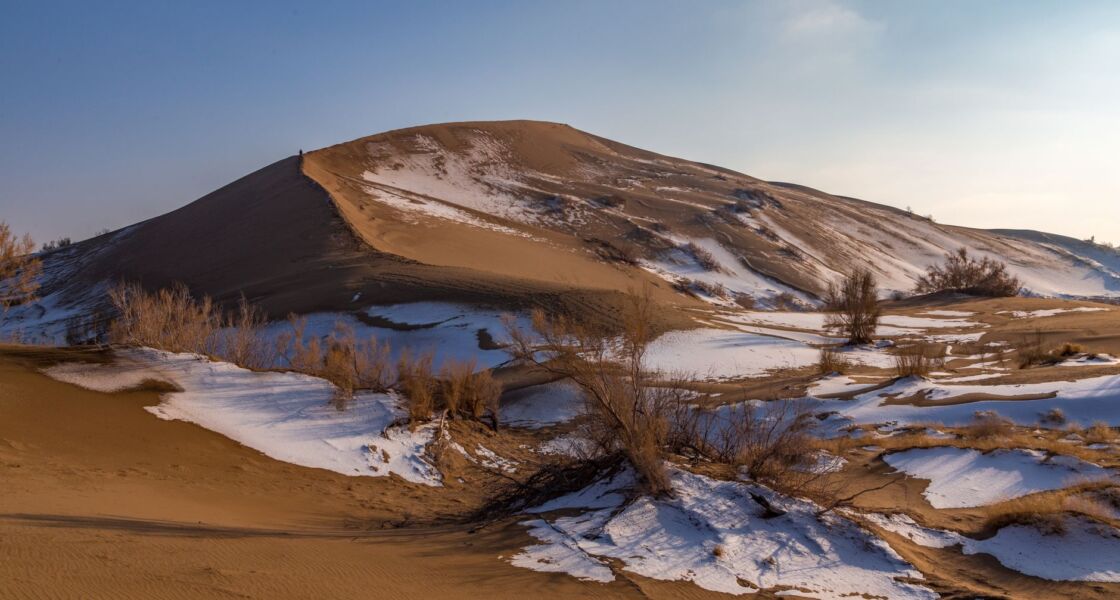
Say the word “desert” and most of us picture the same thing: burning sun, rolling sand, maybe a camel. Here is the belief in one line: every desert is hot.
It is a very natural thing to think. But it turns out that a desert can be covered in snow, and the largest deserts on Earth are not hot at all.
Why we picture deserts as hot
The deserts we see in movies and cartoons are almost always the sandy, sunbaked kind. The Sahara in northern Africa is the star of that show. According to National Geographic, it can reach up to 122 degrees Fahrenheit (50 degrees Celsius) during the day.
Add Death Valley in California, which the National Park Service says is famous as the hottest place on Earth, and the picture is complete. Hot and desert seem to go together like peanut butter and jelly.
So the myth is understandable. The mistake is in how we decide what counts as a desert in the first place.
The verdict: Myth
Myth. Deserts are defined by how little water falls from the sky, not by how hot they are. Some deserts are hot, and some are cold.
The U.S. Geological Survey puts it plainly: deserts are called deserts “because they are dry.” They may be hot, they may be cold, but they are always dry.
What really makes a desert
The test is rainfall and snowfall, together called precipitation. National Geographic says a place that gets less than 10 inches (25 centimeters) of rain per year is considered a desert. The USGS describes a widely used system in which arid land gets less than 250 millimeters (about 10 inches) a year.
A place that gets between 250 and 500 millimeters a year is called semiarid. Those lands are usually grasslands, known as steppes, rather than deserts.
Notice what is missing from that test: a thermometer. A frozen place that gets almost no precipitation counts. A scorching place that gets plenty of rain does not.
Cold deserts are real
Start with the polar regions. Antarctica is covered in ice, yet National Geographic lists its polar desert among the world’s largest. What counts is how little precipitation falls.
Next, travel to Asia. National Geographic notes that some deserts are always cold, like the Gobi.
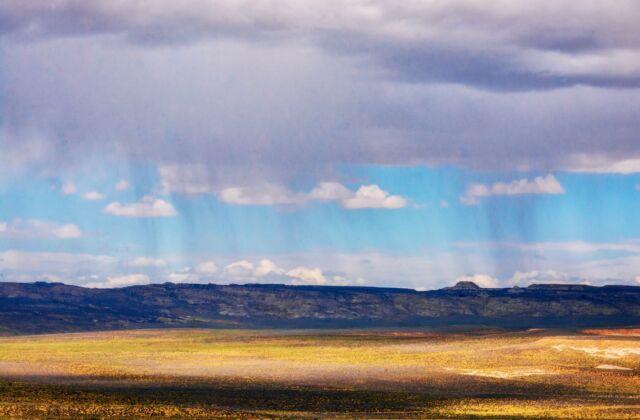
You do not have to leave the United States to find one, either. The Great Basin is a desert in the western United States. The National Park Service states plainly that the Great Basin is a desert, with low humidity and sharp drops in temperature at night. It also notes that it can snow at any time of year at high elevations.
A desert that gets frosty
Great Basin National Park in Nevada keeps careful weather records. At its Lehman Caves Visitor Center, about 6,825 feet above sea level, the January average high is 41°F (5°C). The average low is 18°F (-8°C).
That is a desert where you need a winter coat. And the same park has a mountain, Wheeler Peak, that rises almost 8,000 feet (2,400 meters) above the valley floor. In late spring and early summer, the park reports, the valley can be hot while snow still sits on the high slopes.
The park’s records show something else. In a typical month the Lehman Caves station gets roughly an inch of precipitation. That is not much, which is exactly why it is a desert.
Even hot deserts have cool nights
Desert nights can be chilly. The Park Service notes low humidity and sharp drops in temperature at night in the Great Basin.
The same park shows it in numbers. In July, the average high at Lehman Caves is 86°F (30°C) and the average low is 57°F (14°C). That is a swing of about 29 degrees in a single day.
Not every desert follows that pattern. In Death Valley, the Park Service reports that summer nights can bring lows of only about 85 to 95°F (30 to 35°C). Its deep, narrow shape traps heat. So the night-time cool-down depends on the desert.
What else deserts are not
Here is another surprise. National Geographic says only about 20 percent of deserts are covered in sand. The rest are rock, gravel, mountains and ice.
The driest deserts are extreme. National Geographic reports that parts of Chile’s Atacama Desert get less than 0.08 inches (2 millimeters) of precipitation a year. Yet every few years an unusually rainy spell can cover even the Atacama in wildflowers.
So the next time you picture a desert, add some snow to the scene. Sometimes the driest place around is also the frostiest.