
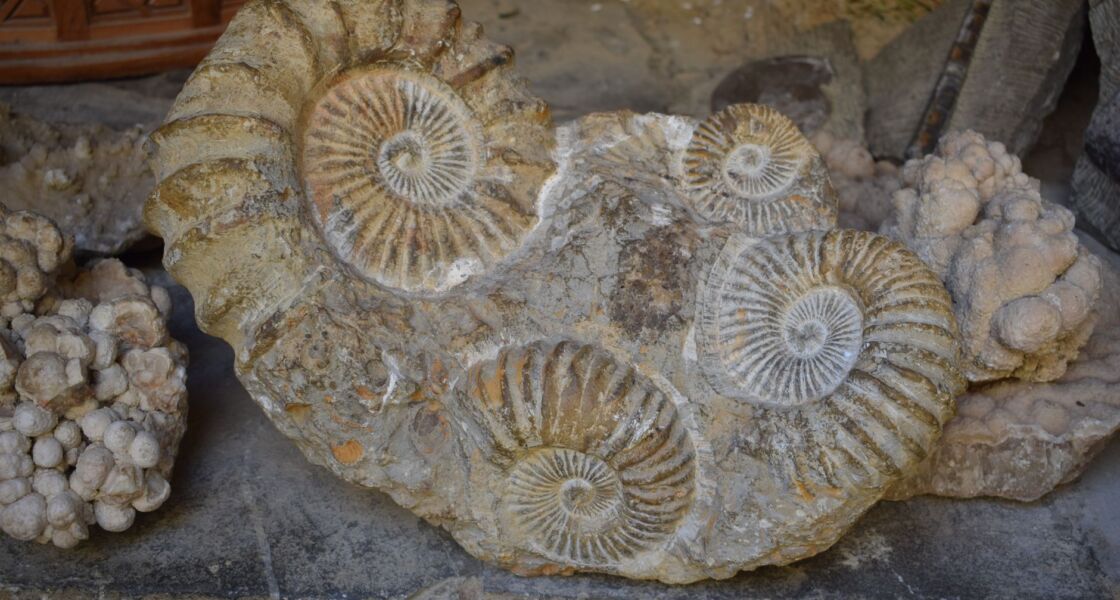
Out of all the living things that have ever existed, only a tiny fraction became fossils. The National Park Service says most organisms die and decay and leave no remains at all. The Smithsonian’s National Museum of Natural History says only a tiny fraction escape being recycled into new life.
So every fossil you have ever seen is a winner of a very strange lottery. Here is how that lottery works, and how a bone can end up as something that feels like rock.
Step one: avoid being eaten, and get buried fast
When an animal dies on the surface, other living things want what is left. Scavengers, bacteria, weather and trampling feet all get a turn. The National Park Service says that to become a fossil, an organism must be buried deeply and rapidly. Fast burial cuts off the oxygen that bacteria need to break remains down.
The Smithsonian’s fossil expert Kay Behrensmeyer describes the whole path in three steps. The remains have to escape that natural recycling. They have to be buried permanently underground. Then they have to be stabilized by minerals so they are not dissolved later.
Where an animal lived matters a lot. The Park Service explains that fossils are much more likely in places where sediment, such as mud and sand, is piling up. That is why animals from the sea, rivers and floodplains show up as fossils far more often than animals from mountains and other highlands.
Step two: minerals move in
Burial is only the start. Next, water seeping through the ground does the slow work.
The National Park Service describes one of the most common methods, called permineralization, which means “added minerals.” Groundwater carries dissolved minerals, often silica (a mineral found in sand and glass). The water seeps into the tiny pores inside buried wood or bone. Minerals settle out there and fill the empty spaces.
Bone looks solid, but it is full of little holes. Behrensmeyer says it is spongy and fragile. Once minerals fill those holes, the bone is strong enough to last.
A second method is replacement. Here, the original hard material dissolves and new minerals take its place. The two methods often happen together. People sometimes call the result petrification, a word that comes from Latin roots meaning “turn into stone.”
How long does it take?
The honest answer is: it depends. The National Park Service says the process can take millions of years. Behrensmeyer says it depends on whether the remains are buried, where they are buried, and how long they take to become mineralized. She adds that fossils can be 10,000 years old, or millions, and that well-mineralized ones can last indefinitely.
Not every fossil is a rock
This part surprises people. The Park Service points out that not all fossils are petrified. A leaf can leave an impression in the rock. Insects can be sealed in amber. Footprints and other signs of animal activity count too. Scientists call these trace fossils.
Behrensmeyer showed a leaf from rocks 56 million years old that was pressed into the stone. It is still flexible. You can peel it off the rock and put it in water. Scientists can even study its cell structure.
Freezing works too. The National Park Service notes that some recent fossils, such as frozen mammoths in Siberia, keep their original bone and tissue instead of turning to stone. Behrensmeyer showed a piece of mammoth hide with orange fur that is 10,000 years old.
Why the odds are so small
The odds depend on what you are made of. The Park Service says hard parts such as shells, bones, teeth and wood are much more likely to be preserved than soft tissue. Behrensmeyer says the Smithsonian’s collections hold mainly fossils of animals without backbones, such as shells and corals. Animals with backbones mostly lived on land, while many shelled animals lived underwater, where it is easier to become a fossil.
Behrensmeyer gives a vivid example. A ground squirrel skeleton left on a Wyoming landscape would fall apart and be trampled. Maybe only the teeth would survive. Even then, a few teeth tell you very little about the whole animal.
Climate plays a part, too. She says bones break down quickly in warm tropical places, where lots of living things are at work. They last longer in colder climates. She adds that scientists are still working out the best climates for fossilization.
And a fossil is not safe forever. If the soil chemistry is wrong, a mineralized fossil can dissolve even after it has formed.
Where to see fossils in the US
The National Park Service describes several places where you can see how this works.
Petrified Forest National Park in Arizona holds one of the world’s largest concentrations of permineralized wood, in rock called the Chinle Formation. Iron and manganese minerals give most of that wood its red color.
At Dinosaur National Monument in Utah, the dinosaur bones in the Quarry Exhibit Hall were permineralized by a variety of minerals, mainly silica.
In Colorado, Florissant Fossil Beds National Monument has some of the largest fossil tree stumps in the world. Volcanic mudflows called lahars buried a forest there about 34 million years ago, and the wood was silicified, meaning silica replaced and filled it. The same lahars dammed a river and made a lake whose fine mud preserved delicate insects and flowers.
Rare events like that can create what scientists call a Lagerstätte, a deposit with extra-rich fossils and fine detail. Each one is a lucky snapshot from the deep past.